How to research a VC fund before you pitch, in short: read what the fund already backs, how recently it wrote a cheque, how big that cheque usually is, which firms sit beside it on a cap table, which of your competitors it already owns a piece of, and which partner would read your deck. NAUT tracks all 6 of those signals on its fund pages, and on the 6 funds read here (Coinbase Ventures, Pantera Capital, ParaFi Capital, Polychain Capital, Multicoin Capital and Variant) they add up to 23 rounds announced between 14 July and 28 October 2026, 27 current partners and 15 portfolio pairs that share at least 1 company.
Data note. Every number here was read from NAUT's own database on 31 October 2026, read-only, and no number is a forecast. The round count covers the 180 days to that date, and the earliest round NAUT holds for these 6 funds inside that window closed on 14 July 2026. Sector lean, average round and capital deployed are the fields each fund's own NAUT page displays, computed over every round NAUT holds for the fund rather than the 23 recent ones. The 27 partners are the people each fund page lists today, by their per-fund title. 2 founding dates and 2 X handles were checked against outside sources, listed at the end. NAUT Research wrote it. 1 Polychain Capital row carries a partial name and is left out of the named examples below, and the count of 4 Polychain people keeps it.
How to research a VC fund: the 6 checks, in order
Good crypto VC research runs in this order, because each check can end the exercise before you spend an hour on the next.
- Check 1, thesis fit. What the fund has already funded, by sector, as a count of rounds.
- Check 2, recent rounds. Whether it has written anything in the last 6 months.
- Check 3, check size. The average round it joins and the total it has deployed.
- Check 4, co-investors. The firms that keep appearing beside it, so you know who else to line up.
- Check 5, portfolio overlap. Whether a rival of yours already sits in that portfolio, or in a neighbouring one.
- Check 6, partner background. The person whose title says they would own your deal.
Here is what those checks return for the 6 funds, ranked by the portfolio count each fund page displays. The top sector is a count of that fund's tracked rounds, and the rounds column counts rounds announced since 14 July 2026. Coinbase Ventures is an exchange arm; the other 5 are venture firms.
| Fund | Portfolio | Top sector | Rounds |
|---|---|---|---|
 Coinbase Ventures |
180 | DeFi, 80 | 11 |
 Polychain Capital |
83 | L1/2/3, 38 | 2 |
 Pantera Capital |
62 | Infra, 25 | 3 |
 ParaFi Capital |
57 | DeFi, 31 | 3 |
 Multicoin Capital |
48 | DeFi, 20 | 2 |
 Variant |
33 | DeFi, 13 | 2 |
Check 1 and 2: what does a fund back, and how recently?
DeFi is the top sector by round count at 4 of these 6 funds. The 2 exceptions point somewhere else: Polychain Capital's largest group is L1/2/3 at 38 of its tracked rounds, with infrastructure and DeFi tied behind it at 33 each, and Pantera Capital leads on infrastructure at 25 rounds against 23 in DeFi. A fund whose largest group is 2 sectors away from yours is a cold pitch no warm intro fixes.
Portfolio size is a measure of how many doors a fund can open for you, and it says nothing about how fast it moves today.
Pace is the second check, and it separates these funds sharply. Of the 23 rounds NAUT holds for the 6 across the 180 days to 31 October 2026, 11 belong to Coinbase Ventures alone. The other 5 funds sit on 2 or 3 each, so a founder reading a 180-company portfolio page is often reading history.
NAUT's data flags a lead investor on 6 of those 23 rounds, so on NAUT's record these 6 funds mostly joined rounds somebody else led in this window. That count is NAUT's record for these rounds and not a claim about every round in the market. Where it matters, open the round and read who is named: Jeeves raised a $110.0M Series C on 29 September 2026 with both Coinbase Ventures and ParaFi Capital on it, and neither carries the lead flag.
Check 3 and 4: how big is its cheque, and who co-invests?
VC check size is the fastest no in the set. Variant's page displays a $62.8M average round and Polychain Capital's displays $24.2M, a 2.6x spread between 2 funds a founder might otherwise treat as the same stop on a list. Those averages are pulled across every round NAUT holds for each fund, so a single large raise lifts one.
| Fund | Avg round | Deployed | Co-investor |
|---|---|---|---|
| Coinbase Ventures |
$29.8M | $5.04B | Wintermute, 17 |
| Multicoin Capital |
$48.2M | $2.32B | The Spartan Group, 11 |
| Pantera Capital |
$25.1M | $1.50B | Coinbase Ventures, 16 |
| ParaFi Capital |
$30.0M | $1.71B | Coinbase Ventures, 11 |
| Polychain Capital |
$24.2M | $1.96B | Coinbase Ventures, 12 |
| Variant |
$62.8M | $2.01B | Coinbase Ventures, 7 |
VC co-investors are the column most founders skip, and they sit in check 4. NAUT holds 1,333 fund-and-co-investor pairs across these 6 pages, and the pattern in them is 1 name: Coinbase Ventures is the most frequent co-investor for 4 of the 6 funds, from 16 shared rounds with Pantera Capital down to 7 with Variant. Multicoin Capital is the exception, with The Spartan Group at 11 shared rounds ahead of DeFiance Capital and Coinbase Ventures at 10 each. Coinbase Ventures' own most frequent partner is Wintermute at 17 rounds.
Read that as a sequencing map. If Coinbase Ventures is already in your round, 4 of these 5 remaining funds have said yes beside it repeatedly, and that is a warmer second call than a cold one. The 23 recent rounds show the same habit at close range: Birch Hill raised a $4.0M seed on 28 October 2026 with Multicoin Capital flagged as lead and ParaFi Capital alongside, and Tenor Finance ran an extended seed on 22 July 2026 with Variant flagged as lead and Coinbase Ventures in the round.
Check 5 and 6: who already has your competitor, and who reads the deck?
Portfolio overlap is the check that saves a wasted meeting. Every 1 of the 15 possible pairs among these 6 funds shares at least 1 portfolio company on NAUT's record, which means a conflict is the normal case rather than the surprise. The table below ranks the 6 largest pairs by shared companies.
| Fund | Pairs with | Shared |
|---|---|---|
| Coinbase Ventures |
Pantera Capital |
16 |
| Coinbase Ventures |
ParaFi Capital |
11 |
| Coinbase Ventures |
Polychain Capital |
11 |
| Coinbase Ventures |
Multicoin Capital |
10 |
| Coinbase Ventures |
Variant |
7 |
| Pantera Capital |
Polychain Capital |
6 |
16 shared companies between Coinbase Ventures and Pantera Capital is 16 chances that the partner reading your deck has a board seat near your competitor. Open the fund's portfolio page and read it for your own category before the call, and if a direct rival is in there, ask about it in the first 5 minutes instead of finding out in week 3 of diligence.
Check 6 is the name. These 6 fund pages list 27 current partners between them, and 20 of the 27 carry an X handle on NAUT. The spread is wide: Variant lists 8, Pantera Capital 7, ParaFi Capital 6 and Polychain Capital 4, while Coinbase Ventures and Multicoin Capital each list 1 on NAUT's record, so at some funds the page hands you the person and at others it hands you a starting point.
The senior name at each fund, by the title NAUT holds for that fund:
 Jonathan King, Principal Investor, Coinbase Ventures.
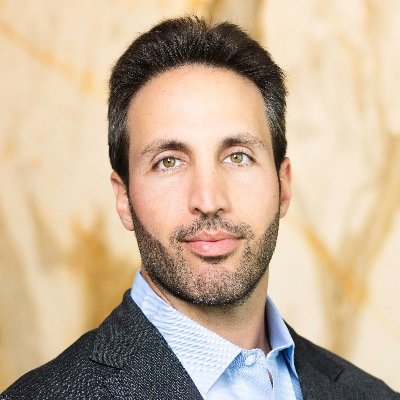 Kyle Samani, Managing Partner, Multicoin Capital.
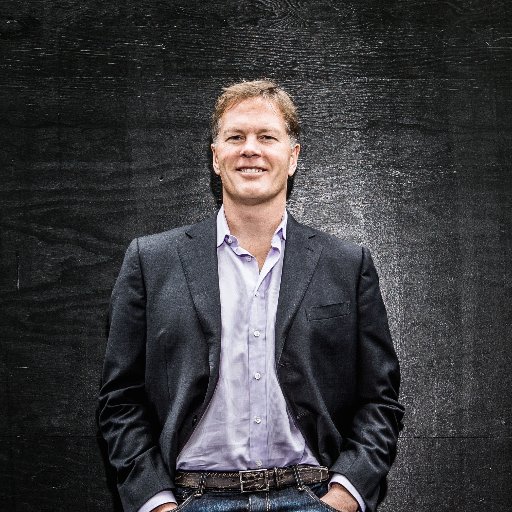 Dan Morehead, Founder & Managing Partner, Pantera Capital. His profile-level title on NAUT reads Board Member / Director, and this article uses the per-fund title, which is the more specific of the 2.
- Ben Forman, Founder / Managing Partner, ParaFi Capital.
 Ben Perszyk, Partner, Polychain Capital.
 Jesse Walden, Founder / Managing Partner, Variant.
Anyone listed can ask NAUT to remove their page at https://naut.so/legal/data-deletion.
2 pieces of fund background sit outside NAUT and were read on 31 October 2026, 1 on the firm's own site and 1 on Wikipedia: ParaFi Capital's site says "Founded in 2018, the firm has been at the forefront of leading edge", and Polychain Capital is "headquartered in San Francisco, California, U.S.". Both matter for a pitch, because a 2018 vintage and a San Francisco desk tell you which fund cycle and which time zone you are pitching into.
A title tells you what the person owns. A Principal Investor and a Managing Partner read the same deck with different authority, and a research or venture partner title usually means sourcing rather than signing. Of the 27, the titles run across managing partner, general partner, partner, principal, venture partner, research partner, investment partner and general counsel, so match your ask to the title before you send it.
How to research a VC fund in 20 minutes before the meeting
The 6 checks fit into 1 sitting if you work them in order and stop at the first hard no.
- Start with sector counts, because a fund 2 sectors away from you is finished in 2 minutes.
- Then pace. 2 rounds in 180 days is a different conversation from 11.
- Then the average round, against what you are raising. A $62.8M average and a $3M seed rarely meet.
- Then the co-investor column, to plan who you call second.
- Then overlap, to find the rival before the partner mentions it.
- Last, the partner and the channel, so the note goes to 1 person who can act on it.
- Read the sector countsDeFi leads by round count at 4 of these 6 funds, and L1/2/3 leads at Polychain Capital with 38 rounds.
- Check the pace11 of the 23 rounds since 14 July 2026 are Coinbase Ventures; the other 5 funds wrote 2 or 3 each.
- Match the chequeVariant averages $62.8M a round and Polychain Capital $24.2M.
- Line up the second callCoinbase Ventures is the most frequent co-investor for 4 of the 6 funds.
- Find the rivalAll 15 pairs here share at least 1 portfolio company, up to 16 between Coinbase Ventures and Pantera Capital.
- Name the partnerThese 6 pages list 27 current partners, 20 of them with an X handle.
Related reading on NAUT: How to find crypto investors by round size: 28 funds, 4 steps and Crypto VC partners: 141 at 45 funds, 41 with a channel.
Can you pull this data through the NAUT API?
Yes, and 1 call covers checks 1 to 6 for a single fund: GET https://api.naut.so/v1/investors/pantera-capital with Authorization: Bearer $NAUT_KEY returns the fund with its team and every portfolio row, each carrying the company, round type, amount in USD, announce date and lead flag, which is where this article's sector counts, round counts and overlap come from. To build the shortlist first, GET https://api.naut.so/v1/investors?q=crypto&sort=portfolio returns funds ranked by portfolio size, and each call costs 5 credits on any plan (docs, pricing). Verified Telegram, email and LinkedIn for the people on those pages unlock on any paid NAUT plan, so start a 7-day trial if you need the channel as well as the name.
How to research a VC fund FAQ
What should a founder check about a VC before a pitch meeting?
6 things, in this order: sector lean, rounds in the last 180 days, average round size, recurring co-investors, portfolio overlap with your competitors, and the partner whose title fits your deal. On the 6 funds NAUT read on 31 October 2026, those checks returned 23 rounds since 14 July 2026, average rounds from $24.2M to $62.8M, and 27 named partners.
Which of these 6 crypto funds has been most active since July 2026?
Coinbase Ventures, with 11 of the 23 rounds NAUT holds for these 6 funds between 14 July and 28 October 2026. Pantera Capital and ParaFi Capital sit on 3 each, and Multicoin Capital, Polychain Capital and Variant on 2 each.
How often do 2 crypto funds back the same company?
All 15 pairs among these 6 funds share at least 1 portfolio company on NAUT's record as of 31 October 2026. The largest overlap is 16 companies between Coinbase Ventures and Pantera Capital, whose 62-company portfolio means roughly 1 in 4 of its NAUT-tracked companies also sits with Coinbase Ventures.
Where can I find these funds' partners and their contact channels?
On NAUT. Each of the 6 fund pages lists its current people with their per-fund titles, 27 in total across these funds and 20 of them with an X handle, and GET https://api.naut.so/v1/investors/<fund-slug> returns the same team in 1 call for 5 credits. Verified Telegram, email and LinkedIn for those people unlock on any paid NAUT plan, so start a 7-day trial to reach them directly.
Sources
- NAUT's own database, read 31 October 2026: the 6 fund rows, their portfolio and sector counts, 23 rounds announced 14 July to 28 October 2026, 1,333 co-investor pairs, 15 portfolio overlaps and 27 current partners.
- parafi.com confirms ParaFi Capital's 2018 founding: "Founded in 2018, the firm has been at the forefront of leading edge".
- Wikipedia on Polychain Capital's base: "Polychain Capital is headquartered in San Francisco, California, U.S."
- x.com/dan_pantera and panteracapital.com/team for Dan Morehead's X handle, which the Pantera team page links.
- x.com/jessewldn and variant.fund for Jesse Walden's X handle and his role at Variant.